El Niño is shaping the outlook for Tanzania’s 2026/27 agricultural season. The phenomenon is already established in the tropical Pacific, and international climate agencies expect it to persist into early 2027. For Tanzania, however, the important question is not simply whether El Niño will bring more rain or less rain. The more practical question is what changing rainfall patterns could mean for farmers, and what can be learned from previous seasons.
Tanzania has experienced significant weather-related disruptions during recent El Niño periods. Heavy rainfall during the 2023/24 season contributed to flooding, landslides and damage to farms and infrastructure in several parts of the country. These experiences provide an important lesson: climate information is most valuable when it changes decisions before the weather arrives.
1. El Niño Does Not Simply Mean “More Rain”
One of the most common misunderstandings is to treat El Niño as a simple prediction of rainfall. It is not. El Niño changes large-scale atmospheric and oceanic circulation, which can alter rainfall patterns differently across regions and seasons.
One of the most common misunderstandings is to treat El Niño as a simple prediction of rainfall. It is not. El Niño changes large-scale atmospheric and oceanic circulation, which can alter rainfall patterns differently across regions and seasons.
For this reason, farmers should look beyond national headlines and pay attention to local and seasonal forecasts, while also considering field conditions and their own experience.
2. What Happened During the Previous El Niño?
The 2023/24 El Niño period provides a useful reference for Tanzania. During the October–December 2023 season, the country experienced exceptionally heavy rainfall in several areas. TMA reported that the season was the third wettest October–December period recorded since 1970.
Heavy rainfall contributed to flooding and landslides, including the devastating landslide event in Hanang District. Farms, roads and other infrastructure were affected, demonstrating how extreme rainfall can create challenges well beyond the farm itself.
The experience also shows why farmers should not think about climate risk only in terms of total rainfall. Timing, intensity, drainage, soil conditions and access to farms can all determine whether additional rainfall becomes an opportunity or a risk.
3. What Could Excessive Rainfall Mean for Farmers?
More rainfall can be beneficial when it arrives at the right time and in the right amount. But excessive or poorly distributed rainfall can create another set of challenges for farmers.
- Waterlogging and poor root development
- Soil erosion and nutrient losses
- Increased pressure from fungal and bacterial diseases
- Difficulty accessing farms during heavy rainfall
- Damage to roads and transport infrastructure
- Delays in planting, spraying or harvesting
- Increased post-harvest losses
- Flood damage in vulnerable fields
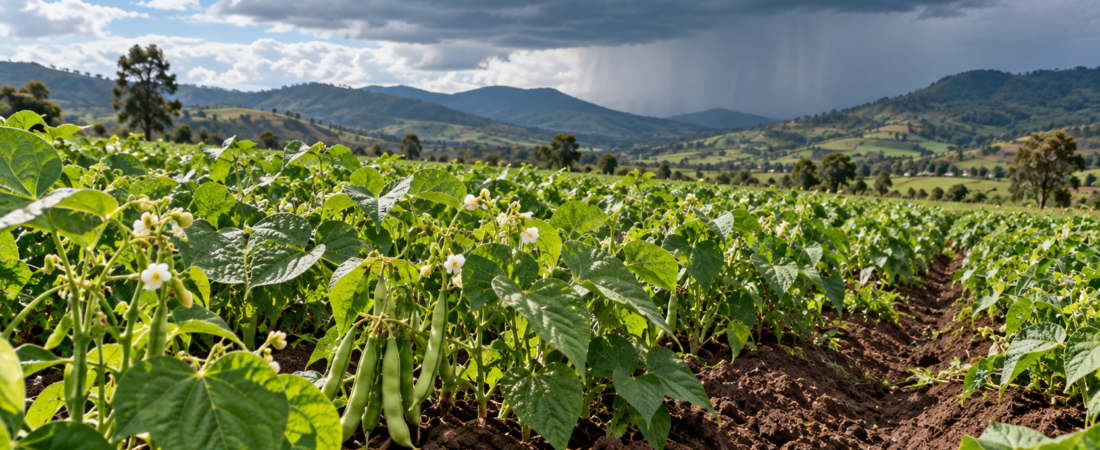
For crops such as potatoes and beans, these risks make field drainage, crop monitoring and timely farm operations particularly important. A season with more rainfall can support production, but only when farmers are prepared to manage the additional moisture.
4. What Can Potato and Bean Farmers Do Differently?
Preparing for a wetter season does not necessarily mean changing everything about the production system. In many cases, relatively simple decisions made before planting and during crop establishment can reduce the risk of avoidable losses.
Start With the Field
Before planting, farmers can identify areas where water normally accumulates, check whether drainage channels are adequate and assess whether soil erosion is already occurring. Fields that regularly become waterlogged may require particular attention before the season begins.
Plan Planting Carefully
Weather information should be considered alongside agronomic recommendations when deciding when to plant. The objective is not necessarily to plant as early as possible, but to establish the crop under conditions that support good germination and early growth.
Monitor the Crop More Frequently
When rainfall and humidity increase, regular field monitoring becomes even more important. Farmers should watch for waterlogging, disease symptoms, pest outbreaks, nutrient deficiencies and erosion. Early identification gives farmers more options than waiting until damage becomes widespread.
5. The Biggest Lesson: Act on Information Early
Perhaps the most important lesson from previous El Niño seasons is that early warning has value only when it leads to early action. Knowing that rainfall conditions may change gives farmers an opportunity to prepare before problems develop.
Tanzania Meteorological Authority provides seasonal forecasts and regular weather information that can support agricultural planning. Farmers can use this information alongside local observations and agronomic advice when making decisions about planting, field preparation and crop management.
- Prepare drainage before heavy rainfall
- Protect farm inputs from water damage
- Review planting schedules when conditions change
- Plan for difficult farm access during heavy rains
- Increase crop monitoring during periods of high rainfall
- Prepare harvesting and post-harvest arrangements in advance
The objective is not to predict every weather event perfectly. It is to reduce avoidable losses by making important decisions before conditions become difficult.
6. What This Means for Kambeta Farms
At Kambeta Farms, we see climate information as part of agricultural decision-making—not as information that belongs only to meteorologists. Our approach connects finance, production, agronomy and markets, because changes in one part of the agricultural system can affect the others.
When weather conditions change, farmers may need to adjust production timing, field management, input planning and harvesting decisions. This is particularly important when working with smallholder farmers, where the outcome of a single production season can have a significant effect on household income.
For Kambeta Farms, the lesson from previous El Niño events is therefore straightforward: better agricultural decisions begin with better information—and information is most useful when it reaches the field in time to act.
7. Looking Ahead
The 2026/27 season will continue to develop, and forecasts will be refined as new information becomes available. Farmers should therefore avoid treating any single seasonal forecast as a guarantee of what will happen on an individual farm.
Instead, seasonal forecasts should be combined with local observations, regular weather updates, agronomic advice and field-level monitoring. The goal is not simply to react to El Niño, but to become better prepared for whatever the season brings.Kambeta Farms | Agricultural Insight
This article provides general agricultural information. Farmers should use official Tanzania Meteorological Authority forecasts and appropriate local agronomic advice when making farm-level decisions